Thank you for your interest in our report
Branded Residences: An Overview.

Branded Residences: An Overview 6th edition.

Thank you for your interest in this new report, which will be emailed to you soon. 

For over 15 years, Graham Associates has worked with dozens of residential real estate and resort projects around the world, developing sales and marketing strategies, creating stand-out materials, and managing lead generation campaigns, many involving branded residences.

If you would like to discuss a residential development project, please feel free to contact me. 

I hope that you enjoy reading my report. 

Chris Graham
Managing Director & Report Author

Thank you for your interest in our report
Branded Residences: An Overview.

Branded Residences: An Overview 6th edition.

Thank you for your interest in this new report, which will be emailed to you soon. 

For over 15 years, Graham Associates has worked with dozens of residential real estate and resort projects around the world, developing sales and marketing strategies, creating stand-out materials, and managing lead generation campaigns, many involving branded residences.

If you would like to discuss a residential development project, please feel free to contact me. 

I hope that you enjoy reading my report. 

Chris Graham
Managing Director & Report Author

Your pre-registration has been recorded and you will be sent a copy shortly

Thank you for your interest in our report
Branded Residences: An Overview.

Your pre-registration has been recorded and you will be sent a copy shortly

Thank you for your interest in our report
Branded Residences: An Overview.

Number of copies?

Please fill in the delivery address.

Thank you for purchasing the
Branded Residences report.

Your copy/copies will be mailed to the address provided.

Thank you for your interest in our report
Branded Residences: A Compendium.

Number of copies?

Please fill in the delivery address.

Thank you for your interest in our report
Branded Residences: A Compendium.

Branded Residences: A Compendium.

Thank you for your interest in this new report, which will be emailed to you soon. 

For over 15 years, Graham Associates has worked with dozens of residential real estate and resort projects around the world, developing sales and marketing strategies, creating stand-out materials, and managing lead generation campaigns, many involving branded residences.

If you would like to discuss a residential development project, please feel free to contact me. 

I hope that you enjoy reading my report. 

Chris Graham
Managing Director & Report Author

Your pre-registration has been recorded and you will be sent a copy shortly

Thank you for your interest in our report
Branded Residences: A Compendium.

Your pre-registration has been recorded and you will be sent a copy shortly

Thank you for your interest in our report
Branded Residences: A Compendium.

Branded Residences: A Compendium.

Thank you for your interest in this new report, which will be emailed to you soon. 

For over 15 years, Graham Associates has worked with dozens of residential real estate and resort projects around the world, developing sales and marketing strategies, creating stand-out materials, and managing lead generation campaigns, many involving branded residences.

If you would like to discuss a residential development project, please feel free to contact me. 

I hope that you enjoy reading my report. 

Chris Graham
Managing Director & Report Author

Branded Residences:
An Overview - 6th Edition

With 68 fact-filled pages featuring latest research, data, and insights from global experts, this report remains the industry’s #1 study of this burgeoning sector.

The global growth of branded residences has been exponential, not only in terms of quantity, but also locations and brands. Driven by wide-ranging benefits for developers, brands/operators and purchasers alike, they present an unusual “win-win-win” scenario.

This comprehensive new report examines the remarkable growth in the sector, exploring the reasons behind its dominant role in today’s global real estate market.

The ideal guide to branded residences – essential reading.” Richard Bursby, Taylor Wessing LLP

The most comprehensive publications on this fast-growing sector, covering a wide range of topical issues and considerations. A must-read for any real estate developer or investor.” Daniel von Barloewen, Senior Vice President, Accor One Living

A master at corralling the trends within the branded residential sector.” Ben Martin, HKS Advisory

“Essential reading.” Felicity Jones, Watson Farley & Williams LLP

A really good and comprehensive report. I recommend it to many clients and industry colleagues.” Tea Ros, Strategic Hotel Consulting

To receive a free copy of the report


Prefer to read it in print?

At 68 pages you may find it more convenient to read a printed copy, rather than continually scrolling back and forth on screen.
Individual printed copies can be ordered (the content is free; the cost covers printing, packaging and postage!).
– UK & Europe – £15
– Rest of World – £20

Simply tick the box on the order form to request printed copy/ies.

Branded Residences:
A Compendium

A comprehensive compilation of brands active in the global branded residences sector.

The exponential growth in global branded residences is well documented, not only in terms of volume and location, but also the quantity and range of participants active in the sector.

In such an ever-evolving landscape, it is no surprise that even industry experts struggle to keep on top of these.

Compiled by Chris Graham, author of the #1 industry report Branded Residences: An Overview, this first-ever Brand Compendium provides a comprehensive snapshot of how remarkably brand-diverse the sector has become; from single site operators to major global hospitality groups, from midscale to luxury, the range now spans multiple sectors including F&B, fashion, automotive, jewellery, publishing – even cartoon characters and hairdressing!

Over 200 brands are listed in this 56 page report, along with a descriptive summary of each to present the market positioning.


Chris Graham’s reports have stood the test of time as one of the go-to references for branded residences. A ‘must-read’ for anybody who wants to understand more about the sector.” Riyan Itani, Founder, Global Branded Residences Consultancy

Chris Graham’s reports are the most comprehensive publications on this fast-growing sector, covering a wide range of topical issues and considerations. A must-read for any real estate developer or investor looking to do a branded residential or mixed-use project.” Daniel von Barloewen, Regional Vice President, Accor One Living (EMEA & India)

Renowned as a go-to expert for those embarking on the development of branded residences, Chris’ insights go far beyond the realm of marketing.” Rob Sykes, Associate VP & Director of Strategy, WATG

Chris Graham is a master at corralling the trends within the branded residential sector, and his reports represent a go-to reference for anyone new to the concept or wishing to keep their finger on the market’s pulse.” Ben Martin, Principal, HKS Advisory

It’s my go to reference source.” Graeme Dickson, Of Counsel, Baker McKenzie

To receive a free copy of the report


Prefer to read it in print?

At 56 pages you may find it more convenient to read a printed copy, rather than continually scrolling back and forth on screen.
Individual printed copies can be ordered (the content is free; the cost covers printing, packaging and postage!).
– UK & Europe – £15
– Rest of World – £20

Simply tick the box on the order form to request printed copy/ies.

Branded Residences: An Overview  Request   Branded Residences: A Compendium  Request  

Branded Residences Overview   Request Brand Compendium   Request

Branded Residences Overview   Request

Brand Compendium   Request

Graham Associates Wins Another Development Marketing Award at the International Property Awards in Dubai

At a gala dinner held at the JW Marriot Marquis Hotel in Dubai last evening, our client The Rest Nature Estate in Nelspruit won the 5* Award for BEST RESIDENTIAL DEVELOPMENT IN SOUTH AFRICA. This is the first time that a residential development in South Africa’s Lowveld region has won this top international award, qualifying it as a finalist in the forthcoming global awards featuring “the world’s best”.

Graham Associates, which prepared the aforementioned Best Residential Development entry, also won an award for DEVELOPMENT MARKETING, SOUTH AFRICA.

Secondlifestyle’s Alec Bates comments, “A very special thank you to Chris Graham and his team in London who, since day one, have played a major role in the rebranding and marketing of The Rest Nature Estate. It is mainly due to Chris’ efforts that we have won these two major accolades.”

Congratulations to all members of the team who have contributed to winning these awards.

The Rest Nature Estate: A Successful Turnaround

Having developed a justifiable reputation as the worst residential estate in the Lowveld (Transvaal) region after the developer finally went into administration, The Rest became 100% owned by Sanlam Ltd (one of South Africa’s largest listed financial groups). Determined to get the development back on track, extensive consultation was held with the disgruntled residents and owners. “Our objective is simple,” commented Development Director Greg Chalmers. “We aim to create the best and safest residential estate in the Nelspruit region.”

Sanlam appointed renowned residential community specialist Secondlifestyle as Development Manager, whose experience includes some of Africa’s leading residential estates such as Pecanwoood, Dainfern, La Camargue, Steenburg, Simola Golf and Country Estate and the multi award-winning Villas Valriche. In turn, Secondlifestlye compiled a team of leading consultants to review, consult, advise upon and oversee the future development of the estate. Graham Associates was brought in to manage the branding, repositioning and marketing strategy.

Following a major rebrand, extensive facilities and security upgrades and the introduction of a range of attractive new home designs, The Rest was relaunched with a regional campaign involving a mix of advertising, events, billboards, direct mail, social media, sponsorships and PR.

Over the ensuing months, the marketing campaign communicated lifestyle and investment messages reflecting the significant improvements at The Rest, which successfully transformed the widespread negative perceptions about the estate among buyers. The Rest soon became the preferred choice in the region, as demonstrated by the unparalleled sales levels achieved over the following 2.5 years:

• Phase 1 – 100% sold out (400 units).
• Phase 2a – 85% of all new released units sold.

Indeed whilst other residential estates in the region were struggling to find buyers, a staggering 70% all Phase 2a plots had been sold within only 10 weeks of release – the highest number of sales achieved within such a short timeframe across the entire Lowveld region, completely bucking the negative economic trend.

Today The Rest is universally regarded as the #1 residential estate in the region – now further confirmed by this prestigious 5* award. “Considering where the development was 4 years ago, it is truly a magnificent achievement to have made The Rest the Best Residential Development in South Africa,” comments Sanlam’s Project Director Leon Bouwer.

Two design challenges with branded residences

Luciano Mazza is Director of Hospitality Architecture at HKS Hospitality Group in London. With a company’s portfolio that includes Four Seasons, Ritz Carlton, Shangri-La, Hilton, Hyatt, Conrad, Mandarin Oriental, Ananda and Intercontinental, Luciano ranks among the world’s most prolific and successful designers of luxury branded resorts.

When it comes to branded residences, today’s designers tend to face two primary challenges.

The first is pragmatic: defining the brief and vision for the development. However, the process has changed over the years. In the past, it was essential to have an operator signed and involved from the kick-off. From a design perspective, this allowed us to start our creative process with properly detailed brand standards and input from the operator’s representative during meetings. However, these days clients tend to appoint an operator at the very last moment – or at least only once the residences’ concept has been established and its design considerably developed.

Clearly, the intent is to limit the changes required to meet brand guidelines. Delaying the decision creates a longer time frame to evaluate different operators and can result in developers gaining a competitive advantage during final negotiations. At HKS we work with every major international brand, so it’s not uncommon that when we start to design a hotel or residences, our clients ask us to follow the standards of one specific, high-calibre brand even if this is not one of the candidate operators, as the resulting design will be fit enough to satisfy a wide range of other brands.

Our second challenge involves philosophy and aesthetics as we consider the all-too-often-misused word “luxury”. What is luxury today, and what will it be in the future? Inevitably, someone will ask if we can really define luxury or “box it” into a few words. Beautiful marble, a striking sofa or a wonderful bathtub are just intermediate stops on the way to luxury. Exceptional architecture and interiors, spotless finishes and precise implementation are a given, but they are not enough. On top of these must-haves, our designs also need to facilitate the rise of emotions and memories.

For me, luxury is time, or a blue sky, or fireflies in the garden at night. Sadly, the children of some of my clients in New Delhi or Shanghai have never seen a blue sky in their entire life! The moments we get to spend with family, friends or even business partners can be a precious luxury. So, when designing branded residences, our aim is to create conditions where people can savor and treasure quality time while feeling at one with their surroundings.

Making a residence a home

I firmly believe a branded residence is still a home. It must feel appropriate not only to the brand but to its owner as well. Conversations and in-person meetings with a development’s top purchasers are invaluable for gaining a better read on a specific market and restoring a designer’s dedication and confidence in delivering exceptional results.

Of course, there’s also the aspect of creating a comfortable degree of exclusivity for the community of owners. Recently, I had a discussion with a prestigious developer about the sales strategy for some high-end, branded villas we will be designing. I found it interesting that their aim is not only to sell a villa or a lifestyle, but also an exclusive community that will benefit them beyond the tangible rewards of their property purchase. Potential buyers are not only scrutinized for their finances but also for their family history, reputation, etc. For example, celebrities and, in particular, footballers, are politely refused.

This could be a unique and extreme case, but it indicates just how important it is to create the right ambience. Bearing this in mind, I see this “Owners’ Club” becoming much more significant within branded residential developments, an increasingly essential and vital part of the luxury offer and not merely a nice complement to the estate.

Many thanks to Chris Graham, managing director of Graham Associates, who is happy for me to share these thoughts I recently contributed for his forthcoming updated report on branded residences.

(The views and opinions expressed in this blog are strictly those of the author.)

9/6/2017

Rising Demand Among Hotel Brands for Wellness Programs

balance-110850_960_720

Interesting article published by Skift reports how hotel brands are developing more all-encompassing wellness retreats and partnering with trendy health brands in an attempt to deliver transformative travel experiences.

Wellness is now mainstream in luxury hospitality, and it’s becoming more prevalent in the upper-upscale category as well. For example, Hilton just unveiled a new in-room gym design and Westin debuted its new partnership with boutique cycling company Peloton.

A recent Cornell University Center for Hospitality Research study showed that 46 percent of guests intend to use hotel fitness amenities, but only 22 percent actually do. Therefore, the challenge for hotel brands is finding creative ways to motivate guests to do what they say they aspire to do, in an effort to provide a transformative travel experience that extends beyond the hotel stay.

Surprisingly, the rise of “FitTech” was supposed to revolutionize the hotel health and fitness experience. That’s not happening either, at least not at any kind of scale. One reason is because clinical studies are showing that the health benefits for using fitness wearables are underwhelming, and even anti-productive at times.

What does seem to be gaining traction is that hotels are teaming up with well-known third parties in the wellness industry to attract health-conscious clientele. Jack Ezon, president of Ovation Vacations in New York, stated in his annual luxury travel trend report: “Hotels seeking to differentiate themselves in the burgeoning wellness space are signing lucrative partnerships with leading wellness partners.”

Some examples are:

• Lululemon and Shangri-La Hotel, Toronto collaborated on the development of an original yoga video with Lululemon ambassador Amber Joliat. Guests can access the video on the Shangri-La’s guest room TV’s and iPads while practicing yoga in the privacy of their rooms on Lululemon yoga mats
• Mandarin Oriental Hotels and The Mayo Clinic launched a series of Healthy Living Programs. The programs marry Mandarin Oriental’s spa facilities with The Mayo Clinic’s restorative therapies, with packages ranging from 1-5 days
• Park Hyatt New York partnered with the popular MNDFL meditation studio to develop a series of private and semi-private guided meditation sessions, hosted in dedicated meditation spaces within Spa Nalai. More recently, Park Hyatt Hotels partnered with Dr. Frank Lipman to incorporate his Be Well brand into its programming and products

The Global Wellness Summit 2017 trend report proposed eight shifts in the wellness marketplace. The most significant evolution seems to be the rise of interest in improving mental health in addition to body-centric approaches: “Mental wellness will be the biggest future trend, period, from wellness destinations and spas bringing in neuroscientists and psychotherapists to meditation becoming seriously mainstream.” Whether or not hotel brands will be quick enough to keep up with the mental wellness trend remains to be seen.


Graham Associates Wins Another International Real Estate Marketing Award

Graham Associates has won another award for its work in international real estate marketing, this time for our branding and repositioning work and the ensuing marketing campaign for The Rest Nature Estate near Johannesburg, which is now the #1 residential estate in the Lowveld region. The award was presented The Africa & Arabia Property Awards, part of the International Property Awards group which is now in its 26th active year, which are judged by an independent panel of 70 industry experts. This panel is chaired by Lord Caithness, Lord Best, The Earl of Liverpool, Lord Thurso and members of the House of Lords in the UK Parliament.

The awards are given for the quality of design, construction and presentation of individual properties and property developments, interiors, architecture and marketing. The awards are a recognition of achievement in a particular category or discipline by an expert judging panel.

An International Property Award celebrates the highest levels of achievement by companies operating in all sectors of the property and international real estate marketing industries. It is a world-renowned mark of excellence and Graham Associates is proud to have won six Best Marketing Awards over the last few years for our work on residential development projects around the world. These awards were given for work on major development projects in the UK, Canada, Mauritius and now South Africa.

High-scoring winners from the regional awards, such as Africa & Arabia, are automatically entered into the overall International Awards, which ultimately determine the world’s finest property developers and international real estate marketing companies.

The IPAX Africa & Arabia Global exhibition and networking event will be taking place on the 7th September at The JW Marriott Marquis Hotel, Dubai alongside the Africa & Arabia Property Awards, offering an exclusive networking arena for property and international real estate marketing professionals. The entry we prepared for our client also won a Residential Development award, both to be presented at the ceremony in Dubai in September.

For more information, please visit IPAX Global.

the-rest


International Real Estate Marketing Expert Chris Graham Speaks at Montenegro Government’s FREI Conference

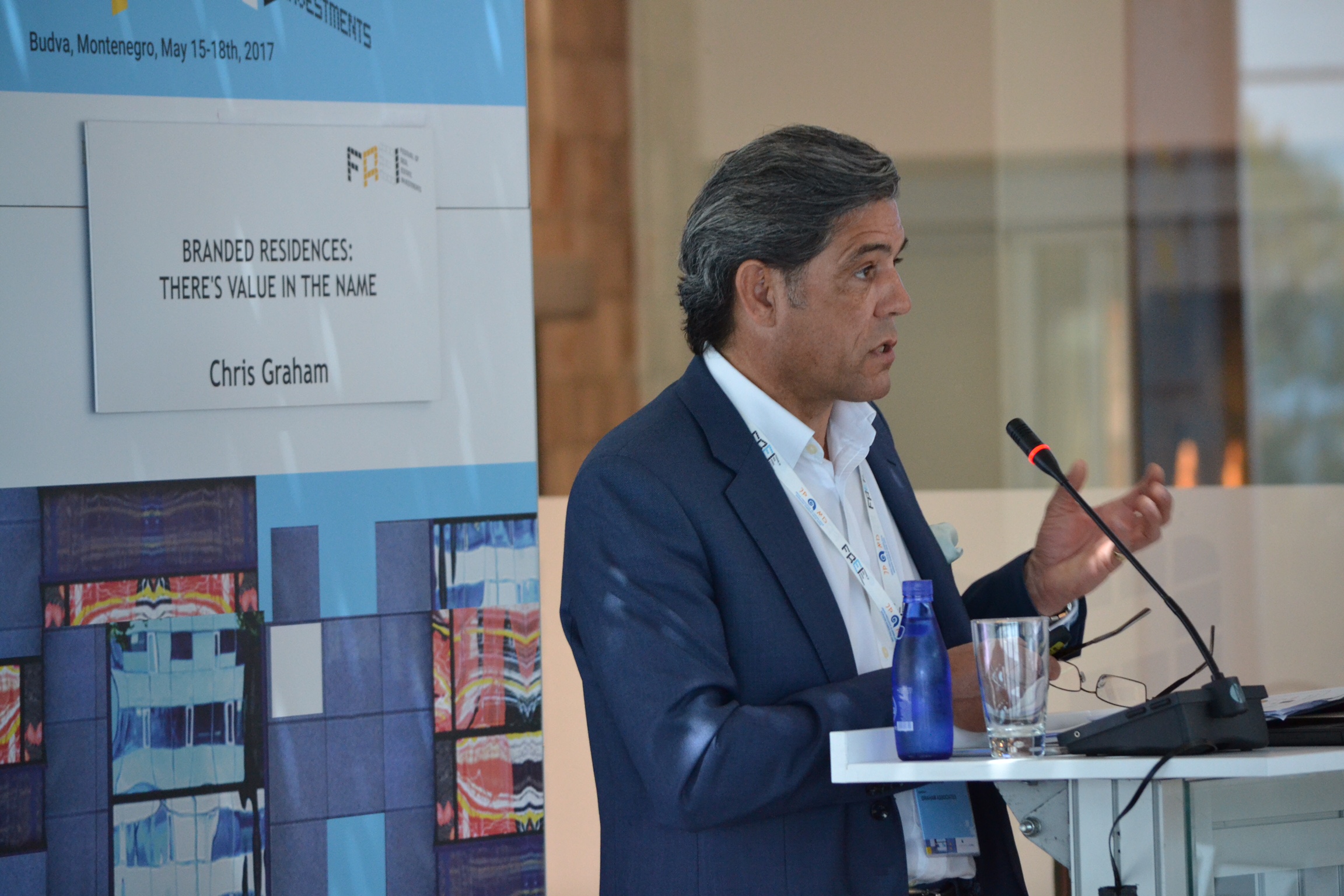
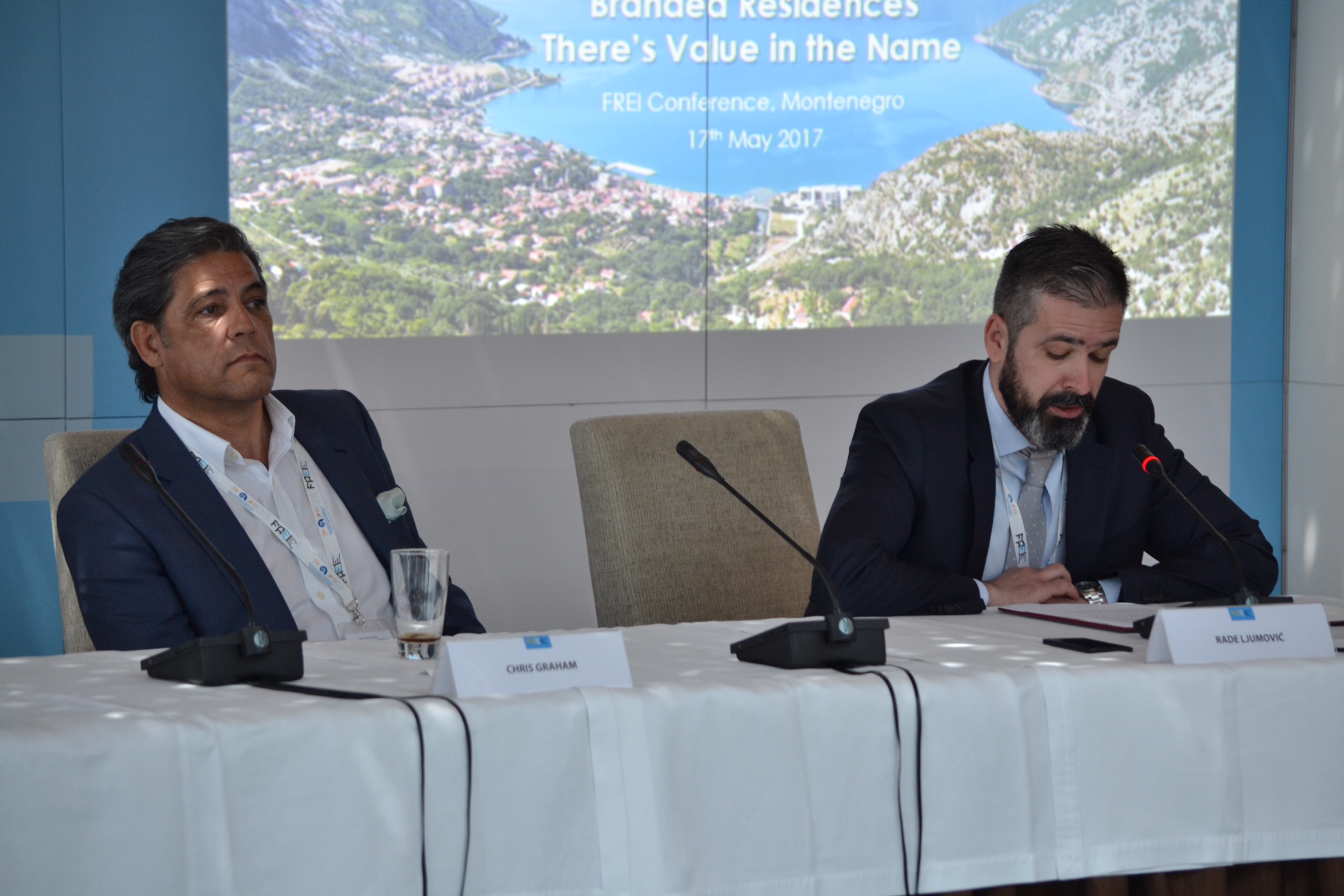
International real estate marketing expert Chris Graham at FREI International real estate marketing expert Chris Graham listens at FREI.

Chris Graham, as an expert on international real estate marketing, was invited as the keynote speaker (presenting on branded residences) at the Montenegro Government’s excellent FREI (Festival of Real Estate Investments) conference this week.  Well attended by all the major players in the regional market.

FREI is an annual event which takes place in Budva on the Montenegrin coast. It has been “carefully designed, using the best experiences of the leading worldwide real-estate gatherings, and through its versatile program taking place in various forms such as exhibitions, presentations-discussions, FREI provides a precise analysis of current investment moment in Montenegro and countries of the region. In addition, the Festival recognizes the global trends and offers projections of future developments in the real estate investment sector.”

Chris Graham was unexpectedly collared for an interview – in Montenegrin – on the live national TV evening news!  You can watch the video through this link, and catch Chris by scanning forward to around 25 minutes into the programme.

In it, he highlights the growing appeal of Montenegro as a destination for global property investment, explaining that in the near-decade that he has spent living and working in the country, he has seen a great deal of responsible and sustainable development.

He also praises the actions of the Montenegrin government which has managed to attract serious investors and luxury property brands that are renowned in the international real estate marketing industry to a relatively small country.

When questioned on a recent piece of research he and his team undertook, he explained that he had gone out to see how people perceive Montenegro, and discovered that as much as half of the people surveyed (from places all around the world)  knew nothing about the country “much less even where it is.” On a positive note, he discovered that of the people who had actually visited Montenegro, 9 out of 10 would be happy to return, which indicates an opportunity for a growing and sustainable tourism industry. Clearly Montenegro is able to charm anyone who makes the trip over!

Cross-Border Global Real Estate Investment Worth US$238.4 billion in 2016

A recent study by Tranio.com, international real estate broker, has analysed cross-border transactions and calculated the sum of cross-border purchases in commercial and residential real estate markets by collating figures from Knight Frank, Cushman & Wakefield, Savills, Colliers, CBRE, Real Capital Analytics and national statistical offices.

Last year saw impressive boosts in foreign investment in several markets as investors increasingly put their funds into overseas real estate to diversify their portfolios and protect their wealth from domestic risks. This is interesting from a property marketing perspective, and offers up numerous opportunities to better connect investors with the best properties for their needs.

The US market was the largest by volume of cross-border residential real estate transactions, as foreign nationals spent just over US$100 billion. The UK follows with US$53 billion.

The study found that Singapore and Spain had the greatest shares of foreign investors in the residential segment.

The citizens of Asian countries, the UK, US and Persian Gulf countries are among the largest and most important investor groups in the global property market. Russian nationals also continue to be noteworthy players.

Combining residential with commercial transactions, other world-leading markets performed as follows:

• Germany (US$25.8billion – of which US$3.075 billion was residential).
• France (US$25.1billion)
• Canada (US$21.4billion)
• Spain (US$20.2billion)
• Italy (US$16.3billion)
• South Korea (US$13.8billion)
• Australia (US$13.1billion)
• Singapore (US$11.3billion)
• Netherlands (US$10.5billion).

USA

American foreign investment grew from US$10.3 billion in 2009 to about US$60 billion in 2014. According to the US National Association of Realtors, Americans have shown increased interest in purchasing overseas properties, notably in Mexico, and Costa Rica, the Philippines, Colombia and Canada. In Europe only Spain, Italy and France attract US nationals (approx. 3-4% in each market) and according to AIG Private Client Group, UHNWIs buy property in Mexico (14%), the Bahamas (13%), England (12%), France and the Caribbean (9% each). The majority (79%) of American investors buy residential property, 53% preferring detached homes. Most (87%) are interested in holiday homes or income properties.

According to the National Association of Realtors, between April 2015 and March 2016 Chinese buyers (including from Hong Kong and Taiwan) spent US$27.3 billion on residential property in the USA, comprising 13.7% of all the foreign purchases in the country during the period and an impressive 26.7% of all purchases made in the residential segment. They tend to purchase homes worth around US$900,000, outpacing investment budgets from most foreigners by a factor of nearly two. Individual residential investors often seek out second homes (or abodes for their children studying in the US) and income-generating properties, more commonly in major metropolitan areas on the coasts. This investment is expected to grow to about US$50 billion by 2025. (NB It is worth noting that Chinese property investors are also interested in Canada: according to the National Bank of Canada, Chinese nationals comprise about a third of all buyers in the country).

UK citizens make the fifth largest group of foreign buyers in the US after those of China, Canada, Mexico and India.

United Kingdom

Britons are active overseas investors who most often acquire property in the US and European countries. According to Rightmove, British nationals constitute the largest group of buyers in Spain, Italy and France, with over a half of them acquiring holiday homes and flats in these countries. As such, property marketing professionals looking to sell to Britons would do well to focus on Western European properties.

Investors from China purchased US$3.75 billion in properties in London’s central districts. In the commercial segment, the rise of Chinese investment in the UK was particularly pronounced because of the falling inflows from Europe and the US.

Russian Federation

Figures from the Central Bank of the Russian Federation show that in 2013 and 2014, Russian citizens annually invested just above US$2billion in foreign property. In 2015, this shrank to about US$960 million and the final tally for 2016 is expected to fall short of US$800 million. Russians now seem to prefer budget residential properties, income properties with high yields and commercial properties to anything else – especially luxurious second homes.
According to Wordstat Yandex, Russian citizens searched most for Spanish, Cypriot, Italian, American and German property. Other metrics show that Switzerland and the UK are also popular markets among Russian investors; conversely interest in the Greek, Latvian, and Montenegrin markets is on the decline.

The article concludes that major developments in 2016, such as China’s emergence as a major investment source, impressive rebounding in several US residential markets and suppressed flows from Russia to Europe, may be indicate short-term trends in global cross-border investment flows.

Summarised from Adrian Bishop’s article.

What Do HNWIs Look for When Buying Real Estate?

Interesting new research presented in a report entitled “The Affluent Homebuyer: A Quest for Meaning” from Luxury Portfolio International (LPI) and YouGov can help guide international real estate marketing efforts. HNWI buyers are put into three (rather curiously named) categories:

Practical Explorers (buyers of $1-$2million homes) seek trusted experiences and 80% prefer to work with a real estate agent on their transactions.

Meaning Seekers (buyers of $2-$5million properties) are luxury lovers who proudly assert that once you experience true luxury, it’s hard to scale back (71%). They also value sustainability (74%) and want their purchases to mean something.

Power Players (buyers of homes at $5million+) acquire the finest, most premier properties and are willing to pay to get them, with 83% saying they choose the best and expect the price to reflect this. They are motivated by a desire to ‘have it all’ and want to feel confident that what they have purchased is unrivalled excellence.

For the $million-plus homebuyer, the most important trait they look for in their estate agent is trustworthiness. The second and third are ‘knowing the details that distinguish the best’ and ‘taking the time to understand my needs’.

HNWIs have high – and ever-increasing – expectations of what ‘luxury’ offers them and they know that with each passing year they can expect more; as such, developers, designers, and hotel operators must continually raise the bar by delivering cutting-edge design and innovation along with 5* hotel and concierge services. Once properties have been built to these specifications, international real estate marketing professionals must look for opportunities to promote the luxurious experience. On this issue, LPI’s Stephanie Pfeffer Anton makes a poignant observation when she comments that the standard of luxury property today is very different from that of even a few years ago: “What passed as a luxury experience even five years ago, today feels tired and uninspired. The principle of luxury that matters today is emotional connection, which starts with human interaction and transparency in the process.”

In addition to an emotional connection, buyer motivations are becoming increasingly experiential (defined as ‘something that creates a closer bond between the consumer and the brand by immersing them in a fun and memorable experience’).  An article published by Luxury Society on HNWI trends states, ‘They want cool, they want fun and they want experiences,’ whilst a study found that 70% of Millennials in the US now “…look for experiences that stimulate their senses”.  As reported in our study on Branded Residences, Lynn Villadolid (former Six Senses Director & Brand Ambassador) succinctly observes; “There is now a myriad of top hotel brands offering supreme quality FF&E, so the choice is much more about how the brand’s values appeal to the buyer’s emotions, intellect and soul”.

Which all presents interesting challenges (or opportunities, depending on your viewpoint) for real estate developers and international real estate marketing professionals to stay ahead of the curve, remembering always that the customer remains king. Or queen.

International Real Estate Marketing Report Featured in Condé Nast Title

Claire Pilton’s article in Condé Nast’s property sections this month features international real estate marketing expert Chris Graham’s recent industry report Branded Residences: An Overview.

The article details the way that partnering with an established brand can increase the desirability of a luxury development. Using several examples of globally renowned resorts, Pilton examines the link between branded residences and a profitable investment. Robert Green, of Sphere Estates, points out that these resorts are more likely to retain their high value and make for more appealing purchases for future buyers, should you wish to sell it on.

“On top of the “trophy status”, prime locations, cutting-edge interior design, technology and architecture, hassle-free ownership and premium lifestyle, many offer residents’ discount cards, access to the operator’s properties in other locations, higher rental income, stronger resale values — and like-minded neighbours. Small wonder discerning HNWIs make the best brand ambassadors.”

Effective international real estate marketing is essential for branded residences


Trends and Influences on the Hospitality Sector

One of the most informed people I know on real estate and hospitality is Muriel Muirden, EVP and MD of Strategy at WATG (NB she wrote the Foreword for my Branded Residences paper), so it was with great interest that I read this new report published by Muriel and her team.

The report identifies some fascinating areas that the hospitality industry will increasingly need to consider, if it wants to cater for evolving customer requirements and tastes. These provide guidance for many excellent international real estate marketing opportunities. A summary of these trends discussed in the document is given below:

1. Digital Detox: Jaded by the endless distraction of social media and the addictive nature of the smart phone, we are seeing a strong movement towards digital detox. For the lodging sector we see strong opportunities to develop wilderness resorts that must offer a plethora of outdoor pursuits meshed seamlessly with a strong holistic ‘wellness’ theme…..and total immersion and digital disconnection is a priority.

2. Edible Environments: Farm-to-table and ocean-to-plate experiences are now well established on the travellers’ wish list – local produce and indigenous eating experiences are expected and no longer hold a novelty factor. But now we see the rooftop-to-salad bowl and golf rough-to-entrée – in essence the emergence of the ‘edible resort’. ‘There is without doubt an increased awareness of the provenance of what we eat. Our focus increasingly is on creating hotel landscapes that are edible ornamental gardens. We are placing hotels within vineyards, under olive groves and above edible parterres to create enduring, relevant and delicious experiences for hotel guests. Why have a fruit bowl when you can wander onto your balcony and pluck an orange from the tree?’ observes John Goldwyn, VP of Planning and Landscape at WATG. The report also highlights a desire for the simple life, driving a trend for communities and resorts anchored in eco-agriculture.

3. Fitness & Wellbeing: Across the generations we have become preoccupied with our personal wellbeing – boomers strive to hold back the ravages of time, millennials aim to optimise their personal fitness. Our lives are jam packed with wearables, apps, healthy eating blogs, fitness mash-ups and endless pop-ups to lure us into the belief that if we become disciples we can live forever. Yet the hotel sector, with a few notable exceptions, lags behind such innovations. Hotel fitness facilities remain largely traditional in nature. This has to change.

4. Eco-consciousness: Much has been written about the social and eco-consciousness of the over-analysed millennial, but I believe all generations have a greater awareness, and, many have a desire to be helped to do the ‘right thing’. The hospitality sector is uniquely placed to integrate those whose lives have taken a challenging turn back into society: expect more new hotel concepts aimed at making us feel good about ourselves, while contributing to a wider community or environmental platform.

5. Sleep: A good night’s sleep is the new holy grail and we will pay to seek it out. It is estimated that the industry for sleep apps and wearables will be worth $680 million in just a couple of years. Sleep labs, sleep workshops and sleep schools that create bespoke solutions to analyse and perfect the quality of sleep are springing up before your very eyes. So where is the hotel sector on this debate? Surely the primary purpose of a hotel is to provide a good night’s sleep. We predict a strong movement into hotels exploring this lucrative sector and moving it back to the top of their marketing agendas.

6. Simplification: Contemporary life is characterised by a tsunami of choices and decisions – from choosing fabric conditioner to selecting our latest smart (or dumb) phone. Sleep aside, the buzz is all about simplification: downsizing our decision-making for a less fatiguing life. So what does this mean for the hospitality sector? Goodbye to pretentious dining with lengthy menus and wine lists (give us menu free dining, single ingredient menus and simpler choices). Declutter our bedrooms and bathrooms and give us a fabulous bed, a ‘wow’ shower and generally minimise the choices we have to make.

7. Pets: Airports are creating dog parks and lounges, airlines are creating luxury pet plane cabins and pet friendly travel agents are emerging who ferret out the right accommodation. However, resorts will need to embrace the concept more.

8. Cannabis: ‘Bud and Breakfast’ tourism is most certainly on its way in the US. The $35 million Colorado Cannabis Ranch – Colorado’s first ‘weedery’ – is entering the popular winery and brewery tourism market. Research from Ackrill Capital projects that marijuana as a medical and recreational industry will top $40 billion in the next few years, with the potential to grow to $100 billion once it is legalised throughout the US.

9. Solitude: Much is written about loneliness, most of it focused on the elderly. Recognition of the issue has led to the creation of state and charity driven infrastructure to try to alleviate the solitude of old age. Taking a break from ‘adulting’ is manifesting itself in the evolution of summer camps for grown-ups. We see potential in this genre in a variety of locations and focused on different themes.

If you would like to receive a full copy of WATG’s report, please contact Muriel directly at mmuirden@watg.com.

Global Real Estate Billionaires Rank 3rd Highest in Number

According to Wealth-X’s research, in 2015 there were 2,473 billionaires in the world – a 6.4 percent increase from the year before.

Billionaires are now wealthy beyond belief – and they are getting much wealthier than the broader ultra-high-net-worth (UHNW) population, which is defined as anyone with more than $30 million.

In 2015, there were 212,615 Billionaires and UHNWIs:

• At the bottom end, 155,050 people worth between $30 million and $99 million had a combined wealth of $8.4 trillion.
• At the top end, the world’s 2,473 billionaires were worth a combined total of $7.68 trillion.
• The Top 10 — nine from the United States, one from Spain — have a combined net worth of $582 billion.

Overall, the pace of growth in billionaires worldwide is predicted to slow in line with economic growth around the world. Wealth-X reports that by 2020 the number will actually decline by 16 percent to 3,250, from an earlier prediction of 3,873.

Number of Billionaires on Wealth-X’s list by Sector

1. Finance has 377 (15 percent of the world’s billionaires).
2. Industrial conglomerates, with 317 (13 percent).
3. Global real estate is third with 141.
4. Non-profits (i.e. they made their money some other way or inherited it) has 122.
5. Manufacturing has 120.
6. Technology has 114 (NB six of the top 10 billionaires made their money in technology).

Where Are They?

Although billionaires in the United States are often better known, there are actually more billionaires in Europe (though they have less total wealth than their American counterparts).

According to research from UBS, a new billionaire is created every three days in Asia. Two-thirds of the region’s billionaires are in China, where the number continues to rise quickly.

Excerpts taken from the New York Times article, “The Most Exclusive Club.”